Historic Roof Replacement in Belleville from $5.50. On an 1895 planned neighborhood, what the roof looks like from the street is part of the job. Free inspection and a written quote.
Older Belleville housing is frequently a period house subdivided into flats, which puts the historic character and the multiple-dwelling rules on the same building. The appearance question and the permit question are separate and both apply.
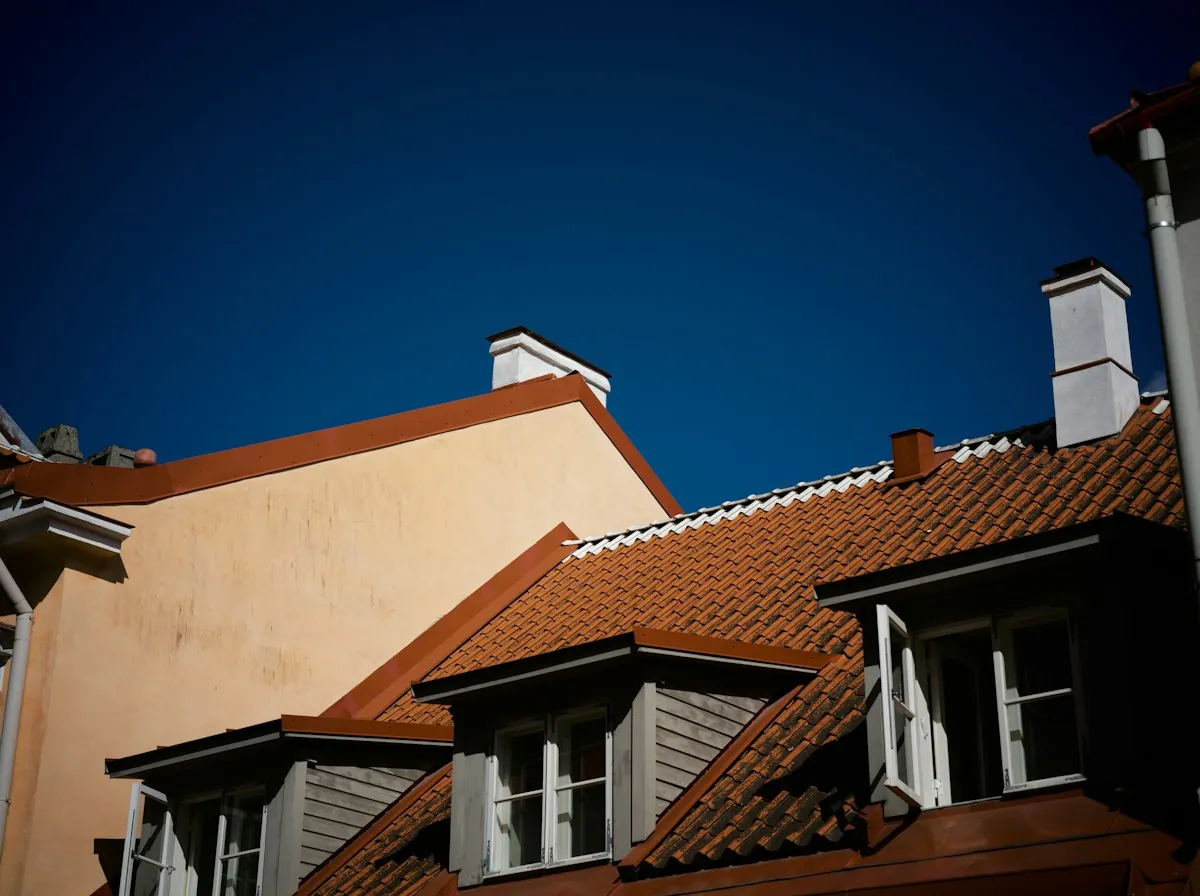
Halcyon Park was laid out in 1895 as a planned community of cottages, ponds and common ground, and it still reads that way from the street. Roofs on housing of that age and character are not simply a covering: shape, color and the detail at the eaves are part of what the house is.


The covering prices like any architectural shingle roof, $5.50 to $8.00 per square foot. What makes a period roof expensive is everything that is not field: valleys, dormers, eaves detailing and roof shapes with several planes. On this housing that detail is itemized separately, because pricing it by area produces a number that will not survive the first day. Unit count first. Three or more dwelling units means permit, closing inspection, tenant notice and a sequence that keeps every unit covered overnight -- and that program, not the covering, is what the price is built around.
Halcyon Park is a historic district laid out in 1895. Whether a municipal historic review applies to a roof, and what it covers, is confirmed with the township before the work is booked -- we do not tell you on a web page that we know.
Boards with gaps between them hold a nail differently from modern sheeting, and any that have to be made good are a real cost. Established by lifting a covering, not by assuming.
Shape, color and the line at the eaves read from the street on a house like these. Getting that wrong is not a technical failure and it is still a failure, so it gets settled before anything is ordered.
The unit count matters more here than next door. Three or more dwelling units puts a building outside the ordinary-maintenance exemption entirely, so a permit and a closing inspection are part of the program rather than a question. Less solar than Bloomfield, and more tenant logistics.
Worth knowing before you start ringing round, particularly if there are panels involved.
Northern roofs fail at the edges in the freeze. Water backs up under the courses at the eaves, freezes, lifts them, and the ceiling below stains during the first thaw -- so the calls arrive in a cluster, in the same two weeks, and the roof that could have been done comfortably in September becomes an emergency in February.
Unit count decides more in Belleville than next door.
On a multi-family building the array frequently belongs to the owner while the roof problem belongs to the tenants, and the removal adds four to seven days of a dead system on top of the roofing.
On a two- or three-family the roof is bigger than the frontage suggests and frequently has a rear section at a shallower pitch.
Denser housing means more flat roofs over occupied space, and that decides the sequence rather than the specification.
Where a property has been divided into flats the garage is often shared or let separately, which raises a practical question before the roofing one: who is commissioning the work, and who has access to clear it before a crew arrives..
Detached township stock. Count the panels first.
Mixed use, flat roofs, parapets. Access first.
Pre-1940. Board sheathing and no ice barrier.
The biggest roofs, and the biggest arrays on them.
An 1895 planned district. Appearance is the brief.
Big Victorian roofs, and slate on a fair number.
Sloping plots, ambitious shapes. Detail, not area.
Asked on every job of this kind. Answered here.
Possibly, and we establish it rather than assume it. New Jersey municipalities may operate a historic preservation commission whose approval is required for exterior changes visible from the public way. We confirm the position with the township before the work is booked, including when the answer is that none is needed.
Because most of the cost is not field. Valleys, dormers, eaves detailing and multiple roof planes are all hand-worked, and a roof with six valleys takes far longer than a plain gable of the same area. That is why detail is itemized separately from area here.
Two to four days on site for a house, three to seven on a period roof with a lot of detail, and one day for a detached garage. A solar array adds four to seven days on top. Weather moves all of it and we will not dry-in a roof we cannot finish.
No. The inspection is free, the written quote is free, and neither carries an obligation. The survey includes counting the array and giving you an honest estimate of how much life the covering has left, which is worth having even if you use somebody else. What we will not do is give you a number at the curb.
Before, if the covering has less than about fifteen years left. The removal and reinstallation cost -- $4,500 to $9,500 -- simply does not happen if the roof is already new when the array goes on. Doing it the other way round means paying a second set of trades to undo work finished the year before, and nobody selling solar has a reason to raise it.
Any array counted and priced separately, not buried in a rate. Both sequences costed, so the cheaper order is obvious.