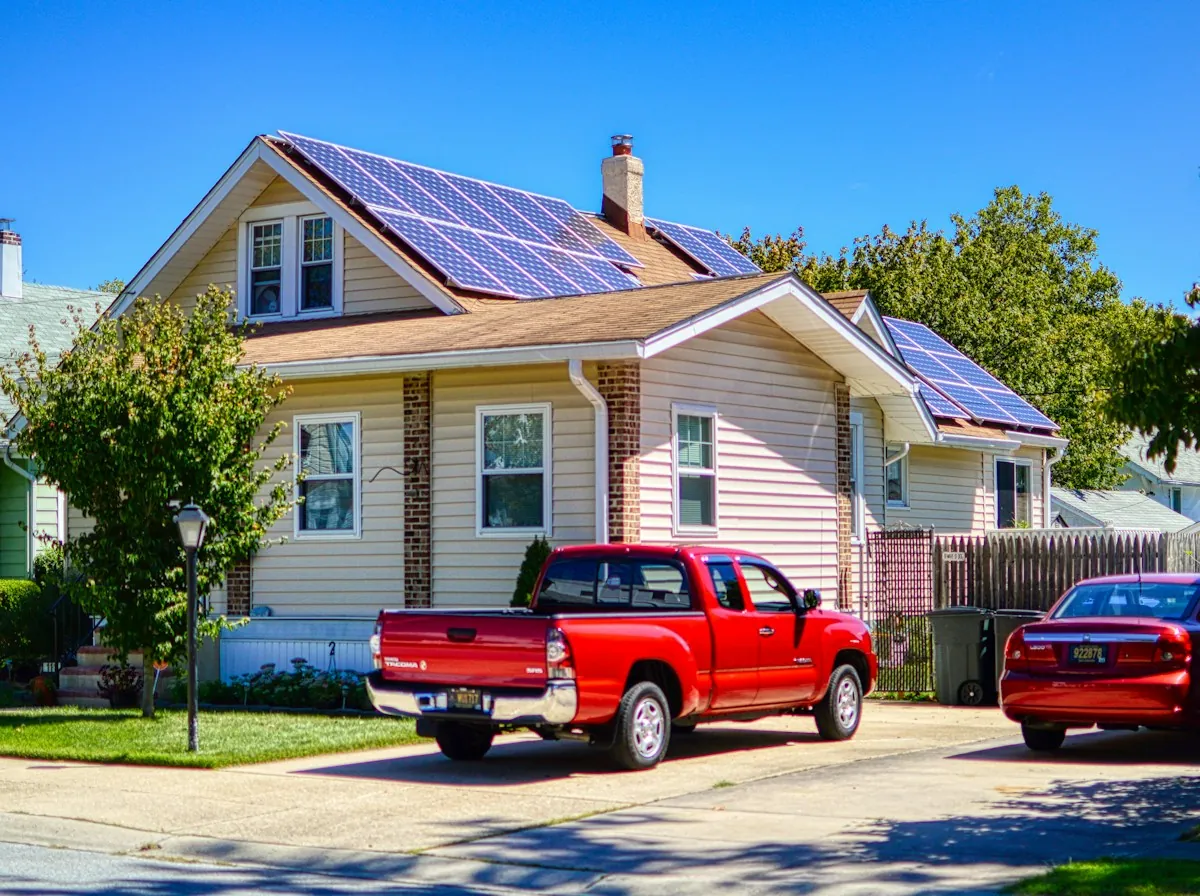
Roof replacement in Bloomfield, NJ priced against published state figures -- including the part most quotes leave out entirely, which is what it costs to take a solar array off and put it back.
Count the panels before you compare quotes. Taking a solar array off and putting it back is $250 to $350 per panel here, so $4,500 to $9,500 on a normal system -- and most roofing quotes in this township do not mention it at all. After that it is the age of the house, because board sheathing and plywood are not the same job.
An architectural asphalt roof in New Jersey runs $9,500 to $26,000, and most 2,000 square foot houses land at $12,000 to $18,000 installed. Architectural shingle is $5.50 to $8.00 per square foot against $4.50 to $6.50 for three-tab, and on a house you intend to keep the heavier product is worth the difference.

REQUEST A QUOTE
Complete the form and describe the work you need help with.


Those are New Jersey figures for an architectural asphalt roof, and most 2,000 square foot houses land at $12,000 to $18,000 installed. What moves a Bloomfield quote furthest from that is not the covering -- it is whether there is a solar array on the roof, which adds $4,500 to $9,500 and is missing from most quotes entirely. Locally the panel count moves a quote further than anything about the covering: $250 to $350 each, on a system of any size. After that it is the age of the house, because board sheathing has to be made good rather than nailed into and plywood does not.
A simple roof shape, a driveway to work from, a deck that turns out sound, and a detached one- or two-family house, which in this township means ordinary maintenance and no permit to wait on.
Panels, first and foremost. Then board sheathing that has to be made good rather than nailed into, a sloping plot needing staging, and roof shapes with more valleys per square foot than modern work has.
How decking replacement is priced. It belongs in the scope as a rate per sheet, because nobody knows how much has softened until the covering is off, and a lump figure is a guess in one direction or the other.
What this often turns out to be instead, and the cost of each.
$250 to $350 per panel to take the array off and reinstall it, four to seven days with the system down, and one question worth five thousand dollars: are the panels already on, or about to go on? If they are about to, and the roof has a decade left, replace the roof first and the removal cost never happens..
Architectural at $5.50 to $8.00 per square foot against three-tab at $4.50 to $6.50 -- a few thousand dollars on an average township roof, and worth paying on a house you intend to keep.
Flat roofing here is usually a rear addition, a porch roof or a dormer top rather than a whole building, at $5 to $14 per square foot by system.
Older housing across the township brings board sheathing rather than plywood, original eaves detailing and roof shapes with more valleys per square foot than modern work.
A detached garage carries the oldest covering on most properties in this township and the least inspected.
If there is an array on the roof -- or about to be -- the sequence is worth roughly five thousand dollars, and nobody selling solar has a reason to mention it.
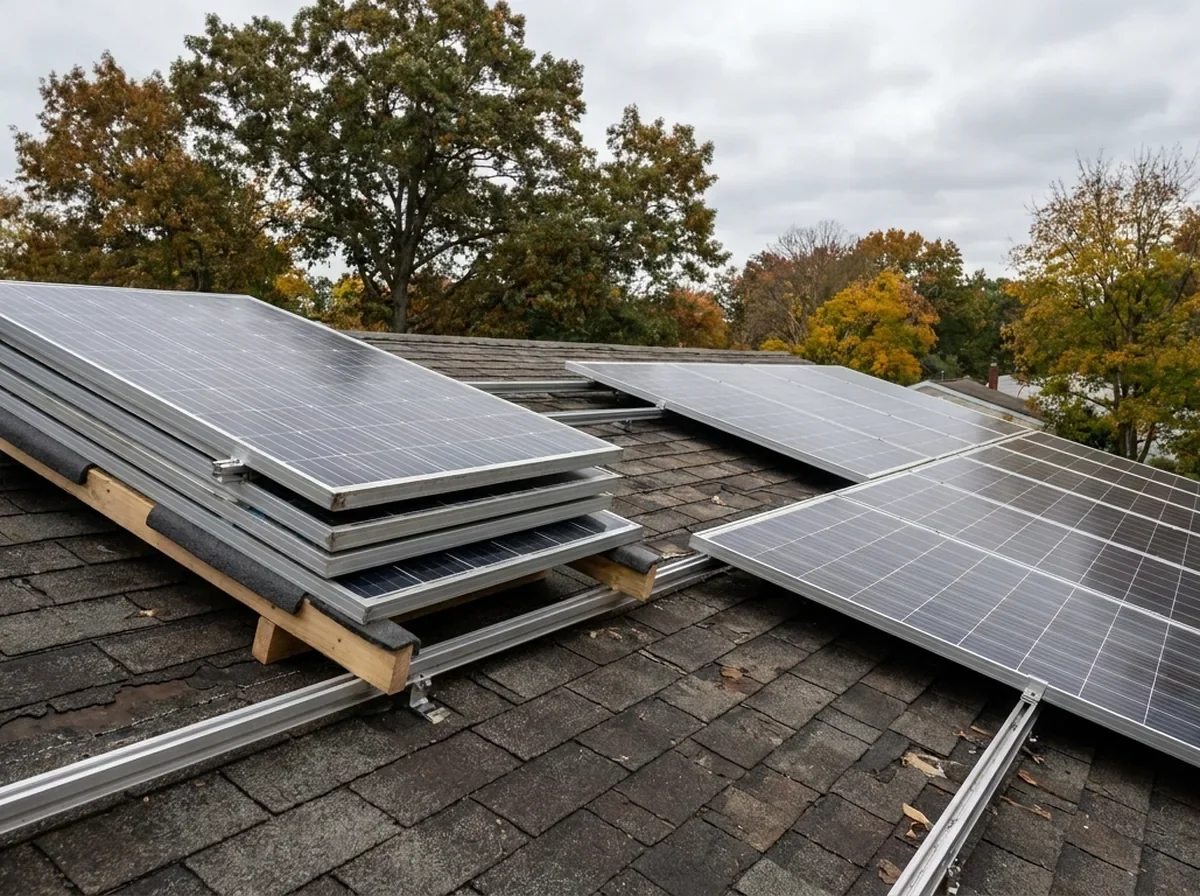
Removal and reinstallation is $250 to $350 per panel in New Jersey. That is $4,500 to $9,500 on a normal system -- a five-figure line on a five-figure job. A roofing quote that does not mention the array has not priced the work you actually need.
A covering with ten years left under panels about to be fitted should be replaced now, while the removal cost is zero. Do it in the other order and you pay a second set of trades to undo work finished the year before. This is the single most valuable sentence on this site.
Because the decision is no longer free, it is a schedule. Knowing the covering has three years rather than ten lets you plan the removal around it -- and lets you do any other roof work on the property in the same window.
On the roof itself the usual test applies: if the covering away from a leak still lies flat, holds its granules and is not brittle, the repair is the right job at $350 to $1,800 rather than a replacement at $9,500 and up.
Free inspection, the solar array counted and priced as its own line, then a written quote.
Tell us the address and whether there are panels on the roof, and roughly how many. That one answer moves the price of the job by thousands and decides how long the array will be down for, so it is worth establishing before anything else.
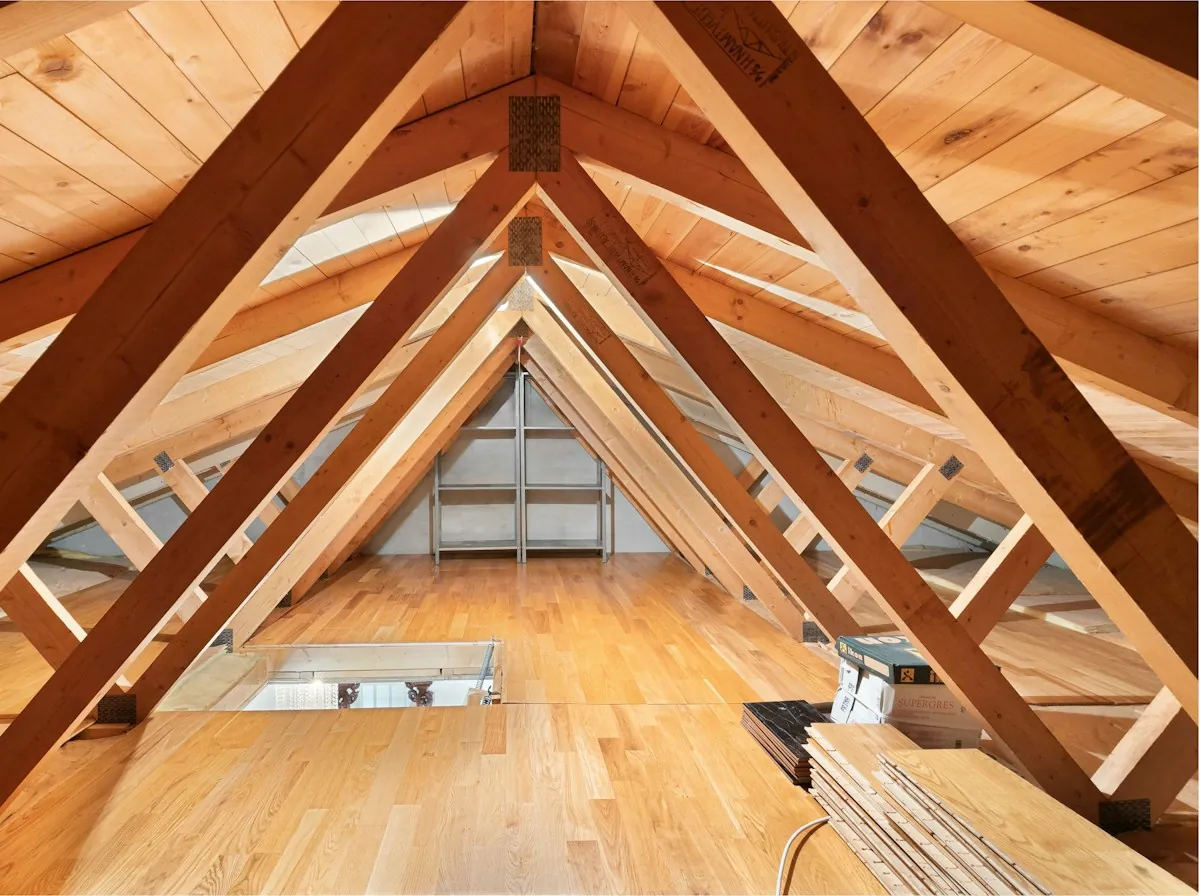
Both together, with the array counted and the covering under it assessed for remaining life. On older housing the roof space also settles whether the deck is board sheathing or plywood, which changes what can go on top of it.
The roof and the array priced as separate lines rather than one figure. Where the sequence matters -- panels going on soon, or a roof with years left -- both orders are costed so the cheaper one is obvious rather than argued.
The array off and stored, the roof done, the array back and reconnected by a qualified electrician, and a before-and-after set that is yours whatever you decide to do next.
The second one is specific to this township and it is where the money is.
New Jersey registers home improvement contractors rather than licensing roofers, and the number belongs on every advert and contract. The register is public. The wording is a tell too: the code says not to call it a license, so a New Jersey roofer advertising their roofing 'license' has not read the rules closely.
Not 'we'll sort the panels' -- a number, per panel or per system, with the disconnect, storage, reinstallation and reconnection listed. This is a $4,500 to $9,500 item and it is the one most commonly missing.
Both are invisible once the roof looks finished and both are what gets you through February. Coverage at the eaves and the nailing pattern are measurable lines on a scope. 'Replace roof' is not a scope.
Per sheet is honest, because nobody knows how much has softened until the covering is off. A lump figure is a guess in one direction or the other, and on board sheathing it is usually the wrong one.
No figure should be given without the roof and the roof space being looked at. We do not quote at the curb and we do not quote from a photograph alone.
New Jersey is one of the most heavily solarized states in the country, and a great deal of that array went onto suburban Essex County housing a decade or more ago. The roofs underneath are now reaching the end of their lives, and the cost of that collision is almost never mentioned at the point when it could still be avoided.
Here is the number. Taking an array off so the roof beneath can be replaced, and putting it back afterwards, runs $250 to $350 per panel in New Jersey: roughly $5,000 to $6,500 on a 26-panel system, and $4,500 to $9,500 across the normal range. It adds four to seven days -- a day to take it down, two to five days of roofing, a day to reinstall and reconnect. A roofing quote that does not mention the panels is a five-figure job with a five-figure omission in it.
And the order matters more than the price. If your covering has ten years left and you are about to have panels fitted, replacing the roof first costs you nothing extra, because the crew is coming anyway. Doing it the other way round means paying five thousand dollars or more to undo work finished the year before. That advice is worth money to you and nothing at all to whoever is selling you the solar, which is precisely why you rarely hear it from them.

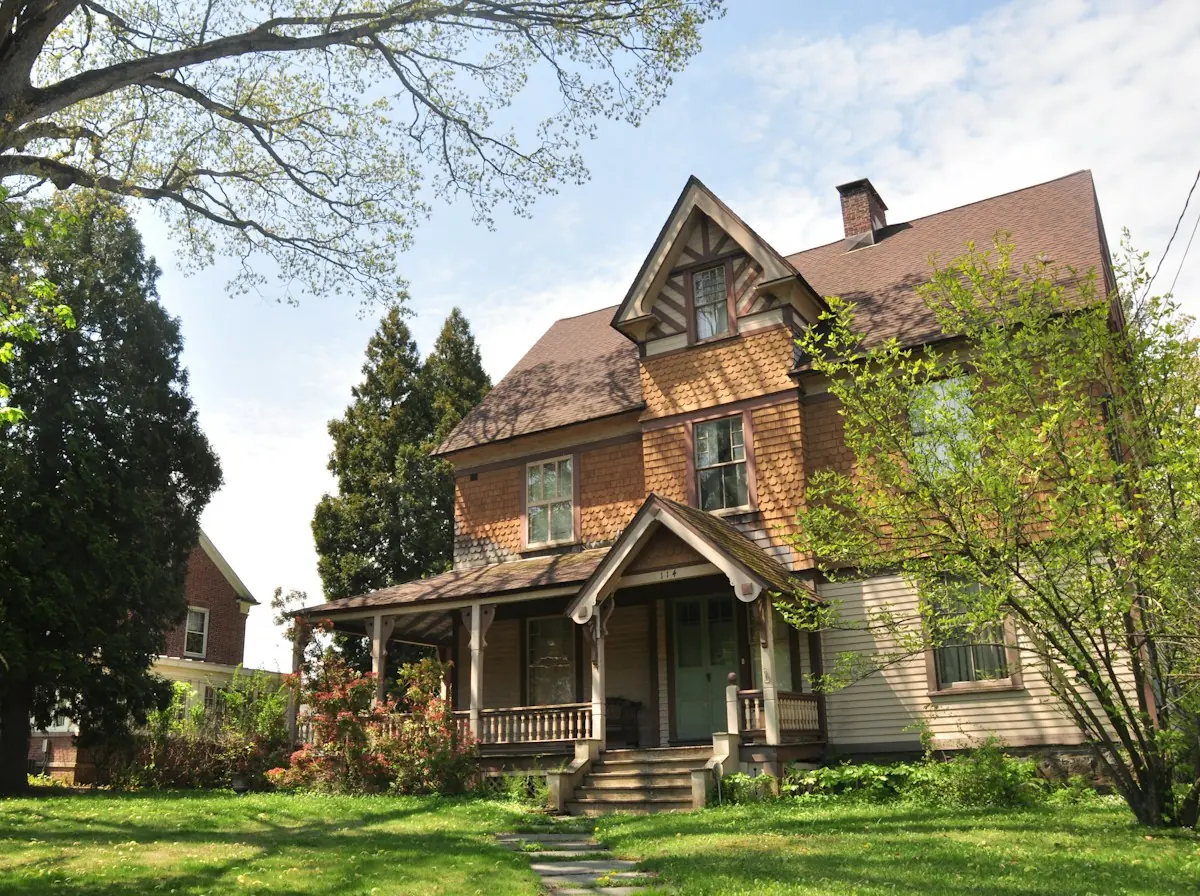
An Essex County township that grew from a colonial settlement into a streetcar suburb, with the Third River running through it. Predominantly detached and semi-detached single and two-family housing across a wide age range, from pre-war frame houses to post-war development, on regular streets.
Two things decide a Bloomfield job. Whether there is a solar array on the roof, which moves the price by $4,500 to $9,500 and is left out of most quotes entirely. And the age of the house, because board sheathing and plywood are not the same job and the older stock here has the former.
Bloomfield is detached enough that a roof replacement is usually ordinary maintenance with no permit at all -- which is the opposite of the dense cities a few miles south.

Bloomfield neighborhood by neighborhood, plus Glen Ridge, Belleville and Montclair. Housing age and what is bolted to the roof both change street by street.
Mixed use, flat roofs, parapets. Access first.
Pre-1940. Board sheathing and no ice barrier.
The biggest roofs, and the biggest arrays on them.
An 1895 planned district. Appearance is the brief.
Big Victorian roofs, and slate on a fair number.
Denser and more multi-family. Unit count decides it.
Sloping plots, ambitious shapes. Detail, not area.
The questions that decide this job, answered before you have to ask them.
Only where it has actually softened, and as a rate per sheet in the written scope rather than a lump guess. On pre-war housing the deck is frequently board sheathing rather than plywood, which holds a nail differently -- so it is established by looking before anything is specified on top of it.
Only on one existing layer with a sound deck. Two coverings is the practical ceiling, and an overlay buries the eaves detail -- so if there was never an ice barrier down there, an overlay guarantees there still is not. In this climate that is the wrong saving.
$250 to $350 per panel in New Jersey -- roughly $5,000 to $6,500 on a 26-panel system and $4,500 to $9,500 across the normal range of residential systems. That covers the electrical disconnect, removal and labeling, storage while the roof is open, reinstallation, reconnection and a production check. It adds four to seven days to the job.
Before, if the covering has less than about fifteen years left. The removal and reinstallation cost -- $4,500 to $9,500 -- simply does not happen if the roof is already new when the array goes on. Doing it the other way round means paying a second set of trades to undo work finished the year before, and nobody selling solar has a reason to raise it.
Usually not. Replacing the covering on a DETACHED one- or two-family dwelling is ordinary maintenance under N.J.A.C. 5:23-2.7 -- no permit, no notice, no inspection -- and in a township of detached houses that is the normal answer. Three or more units, an attached building or anything structural is different, and we confirm it at the survey.
Free inspection, any solar array priced as its own line, and both sequences costed so the cheaper order is obvious.