Garage Roof Replacement in Brookdale from $4.50. The oldest covering on most properties here, and the one nobody looks at. Free inspection and a written quote.
Bigger plots mean genuinely detached garages with their own access, which makes this about as clean a standalone job as roofing gets: its own roof plane, its own route, and no need to touch the house at all.
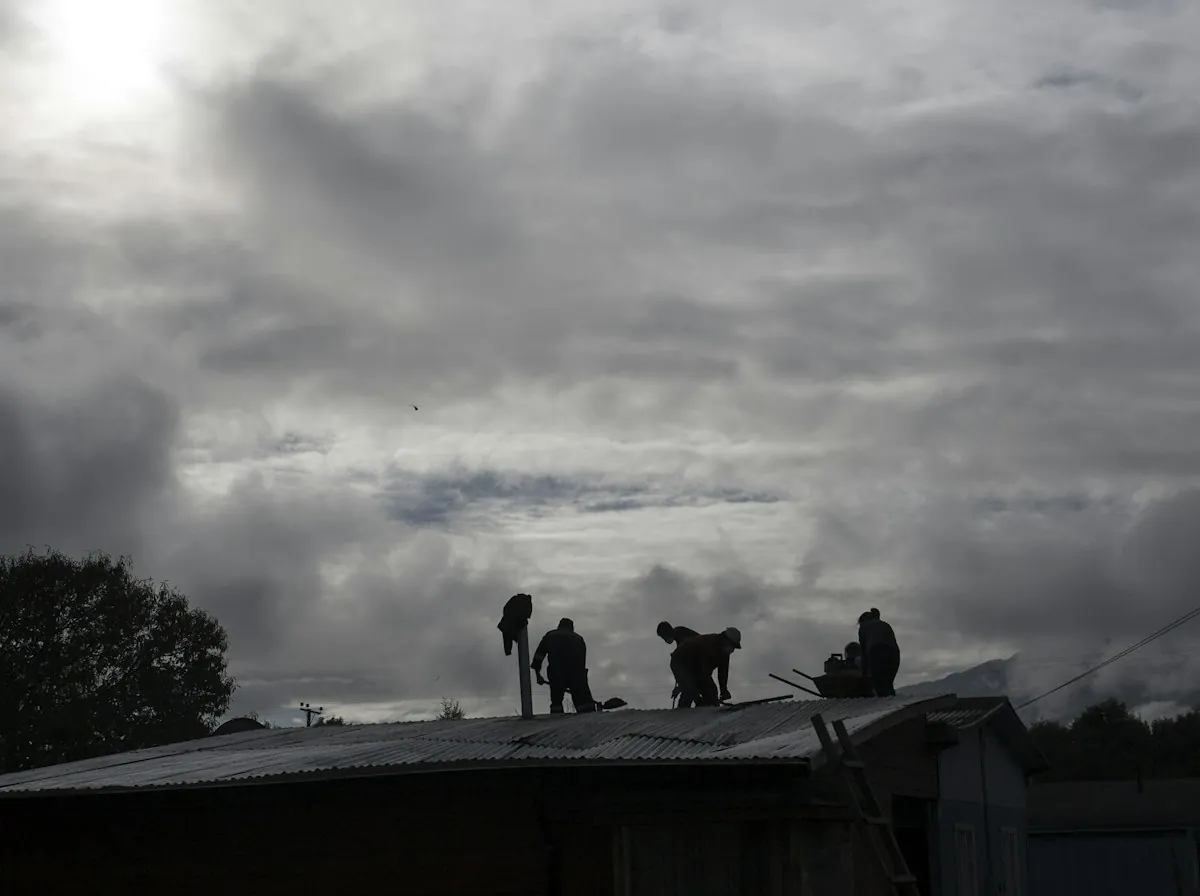
A detached garage roof is almost always the oldest covering on a Bloomfield property and the least inspected. Nobody goes in there in February, so a leak runs for weeks before it is noticed -- and by then the deck has usually taken more water than the visible damage suggests.


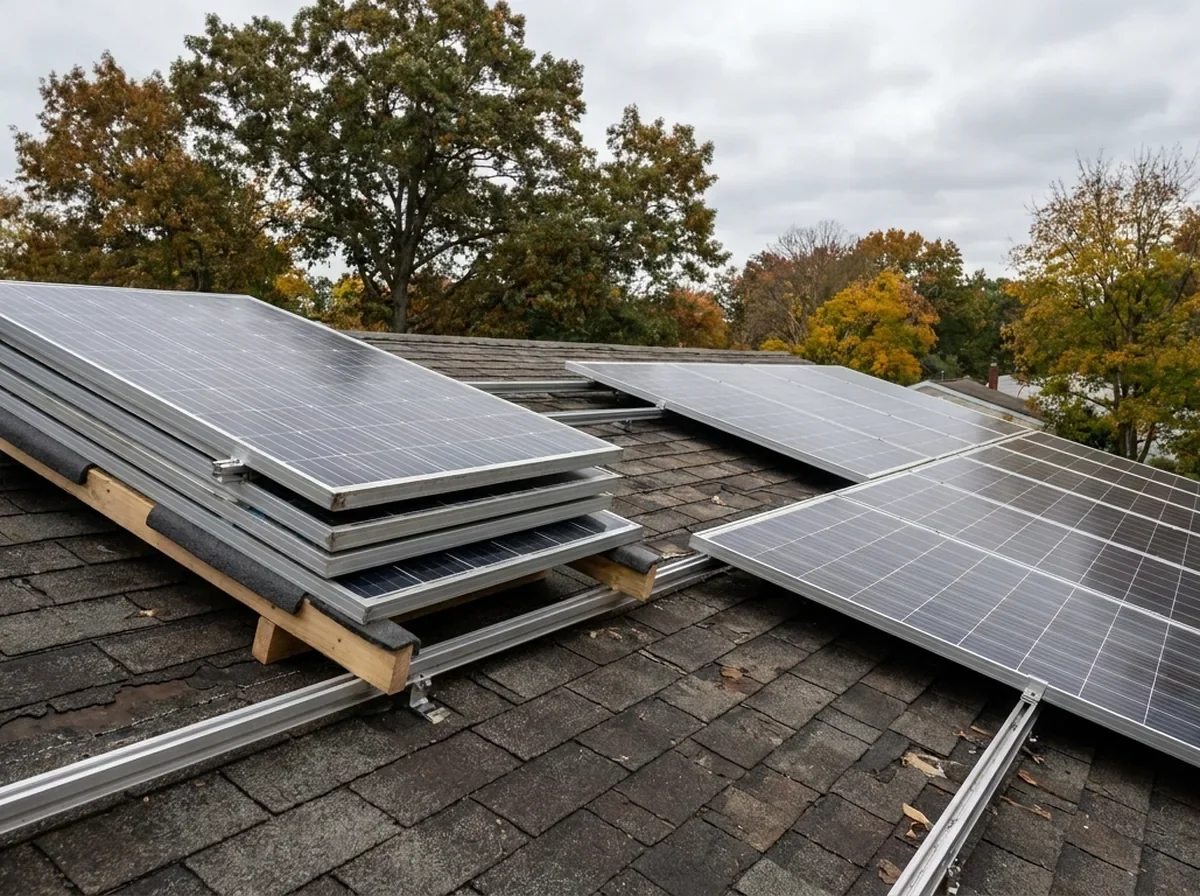
A detached garage roof is the cheapest roofing decision on most properties here -- the same $4.50 to $8.00 per square foot over a much smaller area, so typically $1,500 to $4,000. It is also the oldest covering on the plot and the one nobody has looked at. The largest roofs and the largest arrays, and the removal cost scales with panels rather than area -- so a big Brookdale system is the most expensive version of this job on the site. Tree debris and shaded slopes are the secondary factors.
Nobody goes into a garage in February, so a leak runs for weeks before it is noticed and the boards take more water than the visible damage suggests. We check the deck rather than just the surface.
A detached accessory structure has its own roof plane and its own access, so it can be done alone without touching the house. Under New Jersey's ordinary-maintenance rule it also generally needs no permit.
If the house roof is anywhere near due, doing both in one visit is markedly cheaper than two visits a few years apart. We will say which case you are in rather than quoting whichever one you asked about.
The best solar exposure and the largest roofs in the township, so this is where arrays are most common and where the removal cost bites hardest -- a bigger system is more panels at $250 to $350 each. Mature trees are the other factor: debris in valleys, and shaded slopes that never dry fully after rain.
If there is an array on the roof -- or about to be -- the sequence is worth roughly five thousand dollars, and nobody selling solar has a reason to mention it.
A covering with ten years left under panels about to be fitted should be replaced now, while the removal cost is zero. Do it in the other order and you pay a second set of trades to undo work finished the year before. This is the single most valuable sentence on this site.
Because the decision is no longer free, it is a schedule. Knowing the covering has three years rather than ten lets you plan the removal around it -- and lets you do any other roof work on the property in the same window.
On the roof itself the usual test applies: if the covering away from a leak still lies flat, holds its granules and is not brittle, the repair is the right job at $350 to $1,800 rather than a replacement at $9,500 and up.
The biggest roofs in the township and the biggest arrays on them, which is an unfortunate combination: a larger system is simply more panels at $250 to $350 each.
Large systems are where this cost hurts most, because it scales with panel count rather than roof area.
Bigger roofs make the shingle-grade decision matter more, because the price difference scales with area.
Larger houses bring larger flat sections -- a sunroom, a long rear addition, sometimes a garage roof -- and at that size the insulation specification starts to matter as much as the membrane.
Larger period houses on larger plots, so the work is easier to stage than in the tighter parts of the township -- but the roof shapes are more ambitious and the detail count is higher.
Detached township stock. Count the panels first.
Mixed use, flat roofs, parapets. Access first.
Pre-1940. Board sheathing and no ice barrier.
An 1895 planned district. Appearance is the brief.
Big Victorian roofs, and slate on a fair number.
Denser and more multi-family. Unit count decides it.
Sloping plots, ambitious shapes. Detail, not area.
Asked on every job of this kind. Answered here.
Usually yes, because mobilization is the fixed cost. If the house roof is within a few years of due, doing both in one visit is markedly cheaper than two visits. If it has a decade left, the garage stands alone quite happily and we will say so.
Generally not. A detached accessory structure having its covering replaced falls under the same ordinary-maintenance rule as a detached house in New Jersey. Structural work to the garage itself is a different question, and we confirm it before booking.
Usually not. Replacing the covering on a DETACHED one- or two-family dwelling is ordinary maintenance under N.J.A.C. 5:23-2.7 -- no permit, no notice, no inspection -- and in a township of detached houses that is the normal answer. Three or more units, an attached building or anything structural is different, and we confirm it at the survey.
It might, and we find out rather than guess. Halcyon Park was laid out in 1895 as a planned community and is a historic district; New Jersey municipalities may operate a historic preservation commission whose approval is needed for exterior changes. Whether that applies to a roof here is confirmed with the township before the work is booked.
Two to four days on site for a house, three to seven on a period roof with a lot of detail, and one day for a detached garage. A solar array adds four to seven days on top. Weather moves all of it and we will not dry-in a roof we cannot finish.
Any array counted and priced separately, not buried in a rate. Both sequences costed, so the cheaper order is obvious.